
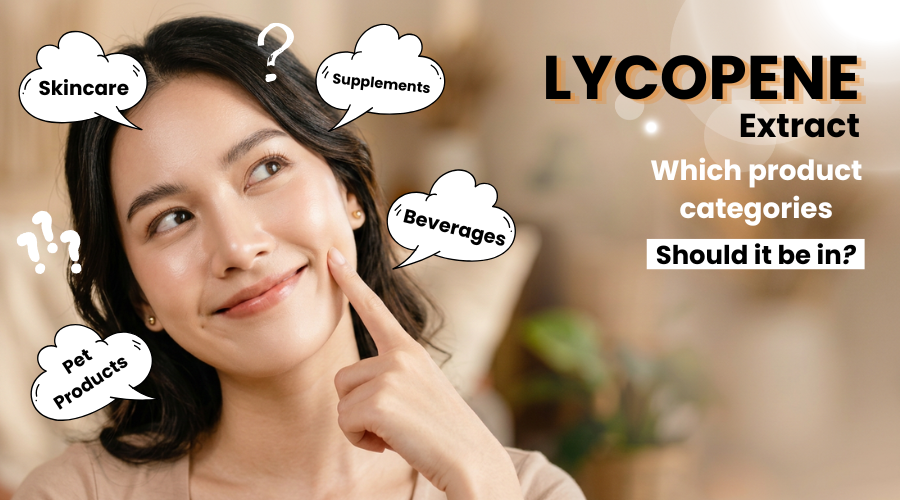
Why Should Brands Pay Attention to Lycopene Right Now?
Over the past 3 to 5 years, the global dietary supplement and beauty markets have shown a notably growing interest in lycopene. With its outstanding properties as an antioxidant — two times more potent than beta-carotene and ten times more potent than vitamin E — lycopene has become an ingredient that leading brands across the Nutraceutical, Cosmeceutical, and Functional Food sectors are racing to incorporate into their product development.
However, the key question that product developers and marketers often ask is: “What type of product is lycopene best suited for?”
This article will answer that question in detail, along with an analysis of the market potential within each product category.
Health Supplements
- Men’s Health Supplements
This is lycopene’s strongest niche. Research from numerous leading institutions has highlighted the relationship between high lycopene consumption and a reduced risk of prostate cancer — one of the top health concerns among men aged 40 and above.
Suitable product formats include softgel capsules, tablets, and sachet powders formulated in combination with Saw Palmetto, Zinc, and Selenium for enhanced efficacy.
- Cardiovascular Health Supplements
Lycopene helps reduce LDL cholesterol levels and prevents oxidative stress in blood vessels, making it an excellent fit for heart health products — a category experiencing strong growth among the elderly and those with cardiovascular risk factors.
- Immune Support Supplements
In the post-COVID-19 era, consumers have placed significantly greater importance on immune health. Lycopene’s anti-inflammatory properties and its ability to stimulate the immune system make it well-suited for immune booster formulas combined with vitamins C, D, and Zinc.
Skincare & Cosmeceutical Products
Sunscreen Creams and Serums
Lycopene acts as an “internal sunscreen” by helping to protect skin cells from UV radiation, reducing DNA damage, and slowing the breakdown of collagen. This makes it an excellent fit for:
- Sunscreen creams that enhance UV protection from within
- Anti-aging serums seeking natural active ingredients
- Night creams designed for skin restoration during sleep
Beauty-from-Within (Nutricosmetics)
The hottest trend in the beauty industry is “eating for your skin,” or Nutricosmetics. Lycopene serves as a key ingredient combined with Collagen, Glutathione, and Hyaluronic Acid in the form of drinks, gummies, or capsules for inside-out skin care.
Marketing Advantage: Thai and Asian female consumers are well familiar with this concept and are willing to pay a premium price for products with clear and specific benefit claims.
Food & Beverages
- Health Drinks
Lycopene can be added to beverages in a variety of formats, such as blended vegetable-fruit juices, ready-to-drink health shots, and sparkling wellness drinks — particularly products using tomato or watermelon as a base, which make it easy and credible to communicate the source of lycopene.
- Functional Snacks and Yogurt
This category is ideal for incorporating lycopene in a format that consumers can enjoy daily without feeling like they are taking “medicine” — such as tomato-flavored yogurt, lycopene-infused protein bars, or healthy snacks.
Pet Products and Animal Feed
The pet health supplement market is growing rapidly worldwide. Modern pet owners want products that support their pets’ heart health, skin, and immune system just as much as their own. Lycopene in the form of pet supplements therefore represents a business opportunity with relatively little competition.
Key Factors to Consider Before Adding Lycopene to Your Products
- Form of Lycopene Used
Lycopene is highly unstable and degrades easily when exposed to light, heat, and oxygen. Choosing the right form for your product is therefore critical. There are generally three main forms: Oleoresin (for softgels and liquids), Beadlet (for tablets and capsules), and Water-dispersible powder (for beverages and food).
- Dosage
Most research uses lycopene at 6–15 mg per day for general health benefits, and 15–30 mg per day for prostate cancer risk reduction. Clearly stating the dosage on the label helps build credibility and meets the needs of consumers who research ingredients on their own.
- Health Claims
In Thailand, health claims must comply with FDA regulations. For those looking to sell in European or US markets, it is advisable to study the relevant EFSA or FDA health claims to avoid legal violations.
Summary: Which Product Category is Lycopene Best Suited For?
If one were to choose the most worthwhile product categories for lycopene development, the answer would be Men’s Health Supplements and Beauty-from-Within Nutricosmetics. Both categories are backed by clear scientific evidence, target consumers who are willing to pay a premium price, and offer significant potential for differentiation from competitors.
For brands looking to enter a new market with low competition, Pet Supplements is an opportunity not to be overlooked — as the market remains wide open and the new generation of consumers is just as willing to invest in their pets’ health as in their own.
SPECIAL TECH CORPORATION CO., LTD.
Tel: 02-123-3623
Facebook : https://www.facebook.com/STC
Line : https://lin.ee/STC
Linkedin : https://www.linkedin.com/showcase/STC
Website : https://specialtechcorporation.com/
E-mail : admin@specialtechcorp.com